Math Warm-Ups and Bell Ringers: Five-Minute Class Starters
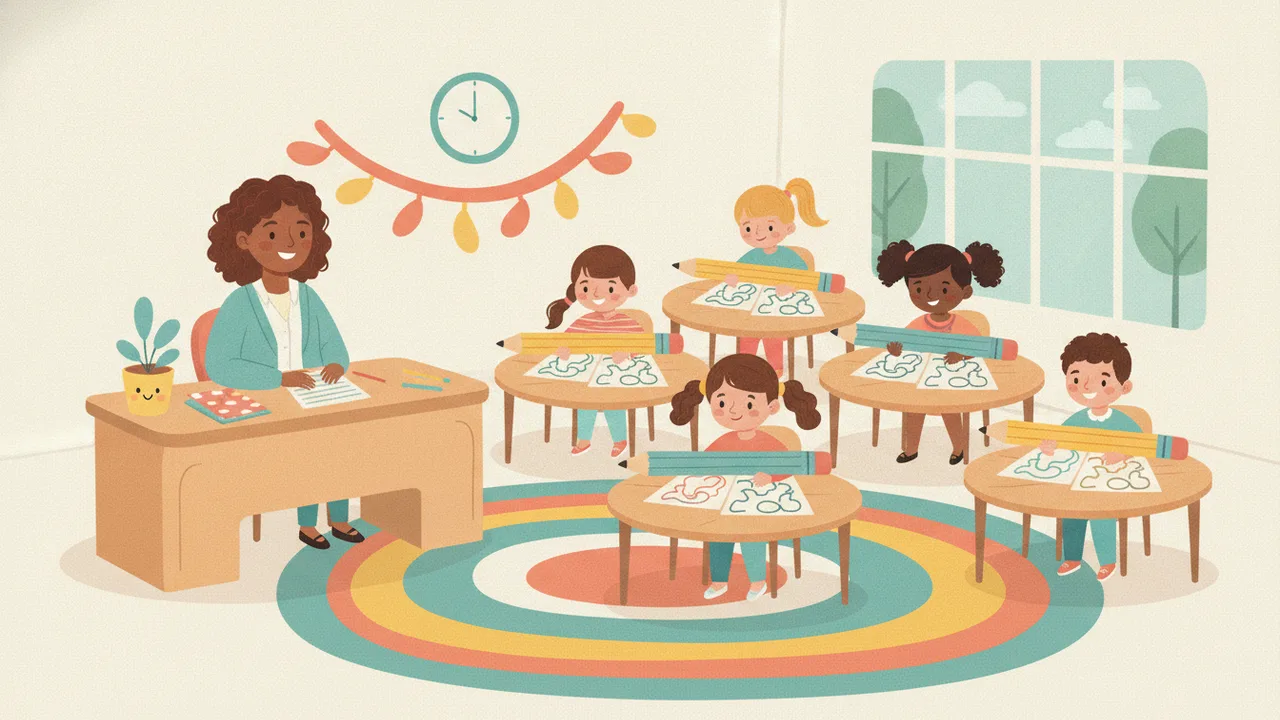
A good math warm-up is short, quiet, self-explanatory and slightly interesting. If kids can start the moment they sit down, you get a few minutes to take attendance, greet students and settle the room, and the class begins with thinking instead of noise.
This page gives a five-minute routine, warm-up ideas that fit a range of grades, and a way to use puzzles as starters without any prep.
The five-minute routine
| Minute | What happens |
|---|---|
| 0 | The task is already on the board or on each desk |
| 0–3 | Kids work alone and in silence |
| 3–4 | Quick check: show of fingers or a self-check against a key |
| 4–5 | One child shares how they began |
Three habits make it work:
- Same place, same time, every day. Routine removes the need for instructions.
- No instructions needed. If a warm-up requires a minute of explanation, it is not a warm-up.
- Share the start, not just the answer. "Where did you begin?" turns a quick task into a lesson on strategy.
Warm-up ideas
Number sense and fluency
- Write four numbers on the board and ask kids to make 24 using any operations.
- Give a number and ask for as many ways to reach it as possible.
- "Which one does not belong?" with four numbers or four expressions.
- A short row of mixed facts to complete: some addition, some subtraction, some multiplication.
Reasoning and strategy
- A single logic puzzle, such as a pyramid or a code with shapes.
- A "what comes next?" pattern.
- A true-or-false equation that needs checking.
Review and preview
- One problem from last week's topic.
- One problem that previews today's topic, without teaching it.
Using puzzles as warm-ups
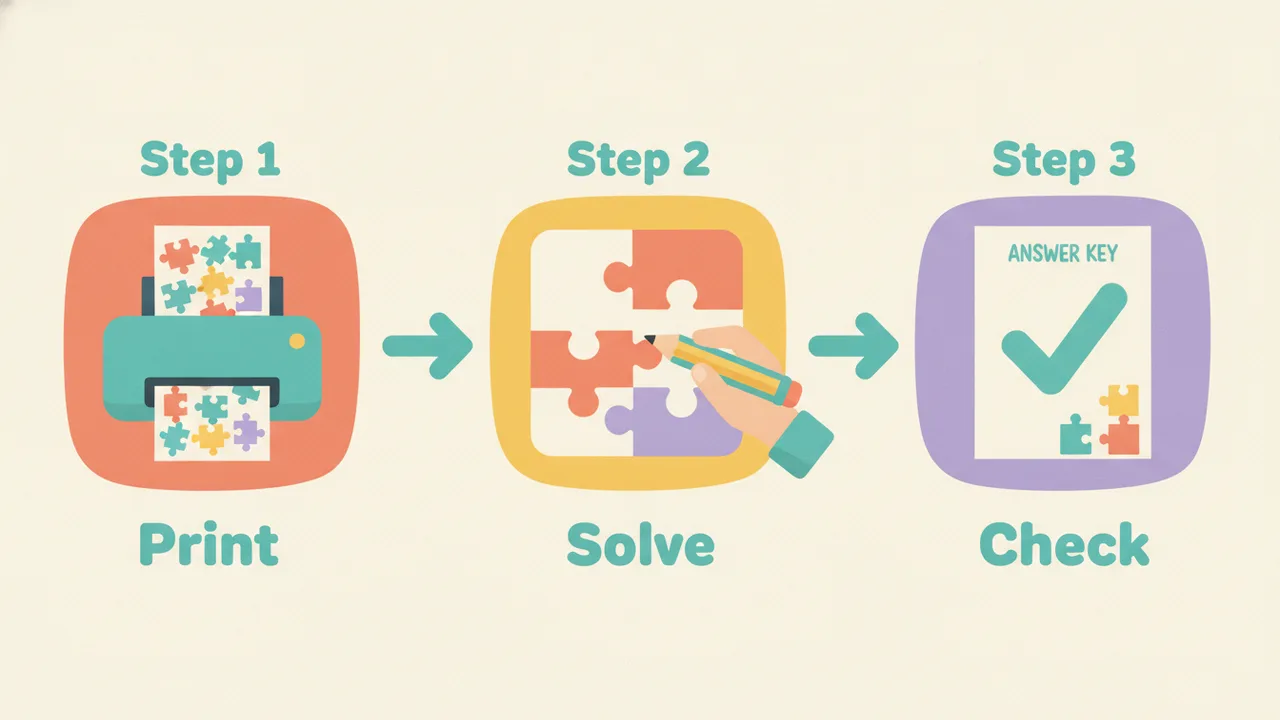
Puzzles are among the easiest warm-ups to use, because the page explains the task, the work is self-contained, and an answer key makes checking quick. A few things make them work in a bell-ringer slot:
- Use Easy puzzles. They are quick and give everyone a way in. Save Medium and Hard for centers and early finishers.
- One puzzle per page. Kids know exactly what to do with a sheet in front of them.
- Vary the game across the week. A path puzzle on Monday, a pyramid on Tuesday, a maze on Wednesday keeps it fresh.
- Keep the key in your hand, and either read answers aloud or let kids check from a posted copy.
What PuzzlePath Math Puzzle Pack gives you for this
PuzzlePath Math Puzzle Pack has seven games with 50 puzzles each. The first 15 in every book are Easy (grades 3–4), so there are 105 Easy puzzles across the seven books. Each book has a "How to play" page with a worked example and an answer key with four solved puzzles per page, and the Parent & Teacher Quick Guide suggests using one Easy puzzle to start class and asking where kids began. Some puzzle pages also carry a short bonus puzzle from the same game for kids who finish early.
The Quick Guide and the books do not come with a ready-made week of warm-ups in order. You choose which Easy puzzles to print each day. If you want a fixed plan, a simple one is below.
A sample week of Easy starters
| Day | Game | Why it works as a starter |
|---|---|---|
| Monday | Number Pyramid | Add and subtract; kids see the answer fit together |
| Tuesday | Snake Math | A short chain of operations that tests mental math |
| Wednesday | Math Mazes | Multiples of 5 on Easy; a gentle fluency check |
| Thursday | Crack the Code | Three shapes and addition; quick reasoning |
| Friday | Cross Math | Equations that cross; kids choose where to start |
For grades 5–6 and 7–8, use the first Medium puzzles (16 onward) or Hard ones (36 onward) in the same rotation.
Classroom management tips
- Print a few days ahead. One batch on Friday covers next week.
- Put the sheet where kids will find it. On desks, in a tray by the door, or projected from the web app.
- Do not collect them. Collecting means marking. Let kids keep them in a folder as a record.
- Have a plan for the fast ones. A bonus puzzle or the next level means nobody sits idle. See math early finishers.
Common problems
| Problem | Fix |
|---|---|
| Kids drift in slowly and the warm-up drags | Start the five minutes at the bell no matter who is late |
| One or two finish in a minute | Give a "next level" puzzle in the same game |
| A few cannot start | Pair them for the first two minutes, then solo |
| It becomes a grading burden | Use self-check and stop collecting |
Keep exploring
For activities that stretch beyond starters, see printable math games with no prep. For fluency work specifically, read math fact fluency games. And for why an answer key with a single verified answer matters, see math puzzles with answers.