Math Enrichment at Home: What It Is and How to Start
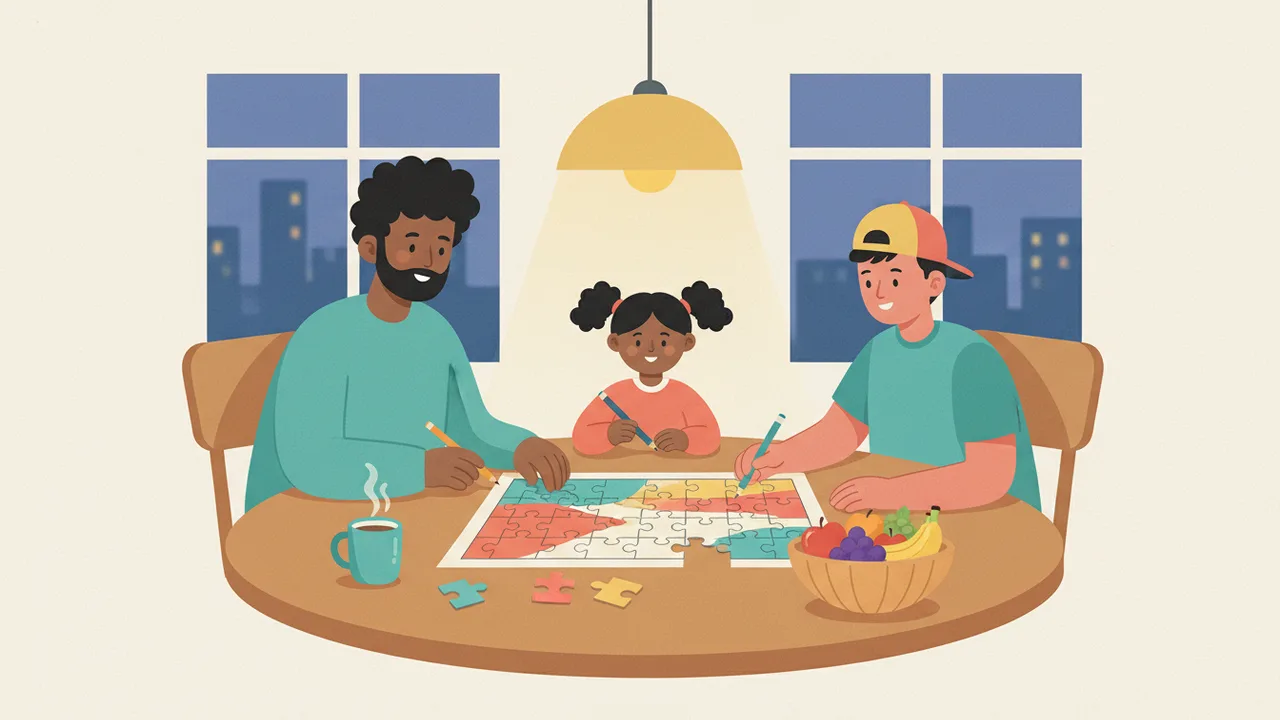
Math enrichment means giving a child more interesting math, not just more math. It stretches thinking sideways and upward: new kinds of problems, harder reasoning, patterns and puzzles that the classroom may not have time for. You can do a good version of it at home, without special training and without paying for a program.
This guide explains what enrichment is (and is not), how to build a simple weekly plan, and what to look for in materials.
What enrichment is, and is not
| Enrichment is | Enrichment is not |
|---|---|
| Wider or deeper problems | The next grade's worksheet, early |
| Puzzles, patterns and reasoning | A longer list of the same exercises |
| Something the child chooses to try | Extra homework as punishment for being fast |
| Challenge with support | Pressure to compete |
A child who finishes school math quickly does not always need to move up a grade. Often they need to see math differently: as a set of puzzles to crack, not a list of procedures to repeat.
Who it suits
Enrichment fits a child who:
- finishes classwork early and says it is easy,
- likes puzzles, patterns or games,
- asks "what if?" about numbers,
- or is simply comfortable with the basics and ready for a bigger challenge.
It can also suit a child who is not ahead at all but who needs a reason to like math again. Puzzles lower the stakes, because getting one wrong feels like part of the game rather than a failed test. If your concern is a child who finds math discouraging, see making math fun when kids say it is boring.
A simple weekly plan
You do not need an hour a day. This is a plan that fits around a normal week.
| Day | Activity | Time |
|---|---|---|
| Monday | One puzzle from a new game; read the "How to play" example together | 15 min |
| Wednesday | One puzzle from a familiar game, a level up | 15 min |
| Friday | A choice: any game, any level | 15 min |
| Weekend | Optional: a harder puzzle or one the child makes up | 15–20 min |
Keep it light. If a session is going badly, stop and try again later. The point is a habit the child looks forward to.
Choosing materials
Look for materials that:
- Mix problem types. Different games exercise different skills, and variety stops it from going stale.
- Have graded levels, so the child can move up without a jump in difficulty.
- Include answer keys, so the child can self-check and you do not have to solve every puzzle yourself.
- Show a worked example for each type so the child can start alone.
- Can be printed, because paper lets a child work at their own pace, think with a pencil and keep a record.
What PuzzlePath Math Puzzle Pack offers for enrichment
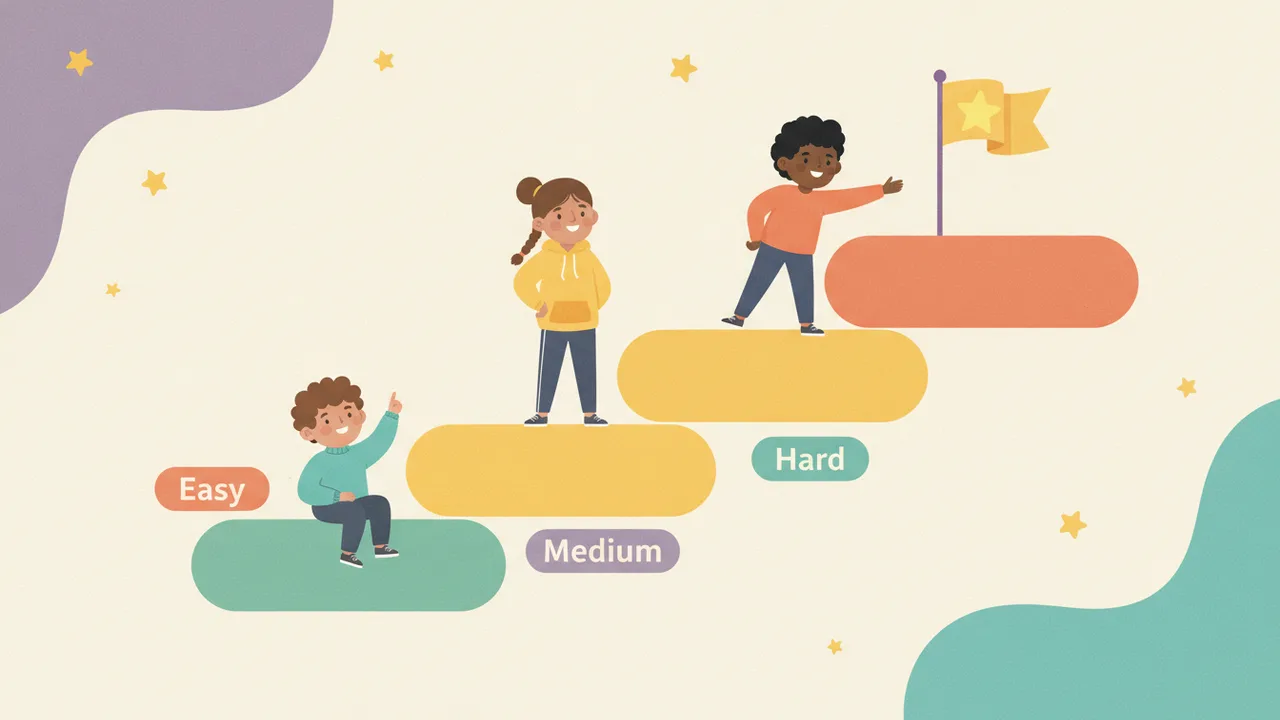
PuzzlePath Math Puzzle Pack is a set of seven puzzle games with 50 puzzles each. In every book, puzzles 1–15 are Easy (grades 3–4), 16–35 are Medium (grades 5–6) and 36–50 are Hard (grades 7–8). For enrichment, the Medium and Hard puzzles are the main material:
| Game | What it asks for at Medium and Hard |
|---|---|
| Snake Math | Follow a winding path of operations; at Hard, deduce steps that are hidden behind a question mark |
| Cross Math | Fill crossing number sentences; at Hard, up to 4 across and 4 down with two operations per sentence |
| Honeycomb Math | Fill hexagons so golden cells hit their sums, with no repeats around the same cell |
| Math Flow | Follow arrows with operations; at Hard, several boxes can only be solved backward |
| Crack the Code | Find the value of up to five shapes using equations, then open the lock |
| Number Pyramid | Six rows at Hard, where clues up high require you to work backward |
| Math Mazes | Find the one path through a 10×10 grid where each step must go to a cell exactly 3 or 4 higher |
Each puzzle has one answer, confirmed by a separate solver, and each book ends in an answer key. A Parent & Teacher Quick Guide and a web app that lets you play on screen or print are included.
How to run a session
- Let the child pick the game. Ownership matters.
- Read the example first. It is the fastest way to learn the rules.
- Do not hint at once. Wait two minutes before offering help. When you do, ask a question ("Which part has the fewest choices?") rather than giving the answer.
- Use the key afterward. If the answer differs, ask the child to find where the two diverge.
- Talk about it. "How did you start?" is the best question you can ask. It builds the habit of explaining reasoning, which is the real skill.
What to avoid
- Racing the clock too early. Time can be a fun challenge later. At first it makes careful thinkers hurry.
- Comparing with siblings or classmates. Compare a child with their own earlier work.
- Skipping the struggle. A puzzle that takes ten minutes and ends in a win teaches more than one that is solved in thirty seconds.
- Expecting grades to jump. Enrichment builds thinking and attitude. Do not promise a specific school result.
Signs it is working
- The child asks to do a puzzle.
- They explain a strategy without being asked.
- They try a harder level on their own.
- They start inventing puzzles for you.
Related reading
For quick starters to build the habit, see math brain teasers for kids. To choose levels by grade, read math puzzles for 3rd to 6th graders and math puzzles for middle schoolers.