Decodable vs Leveled Readers: What Is the Difference?
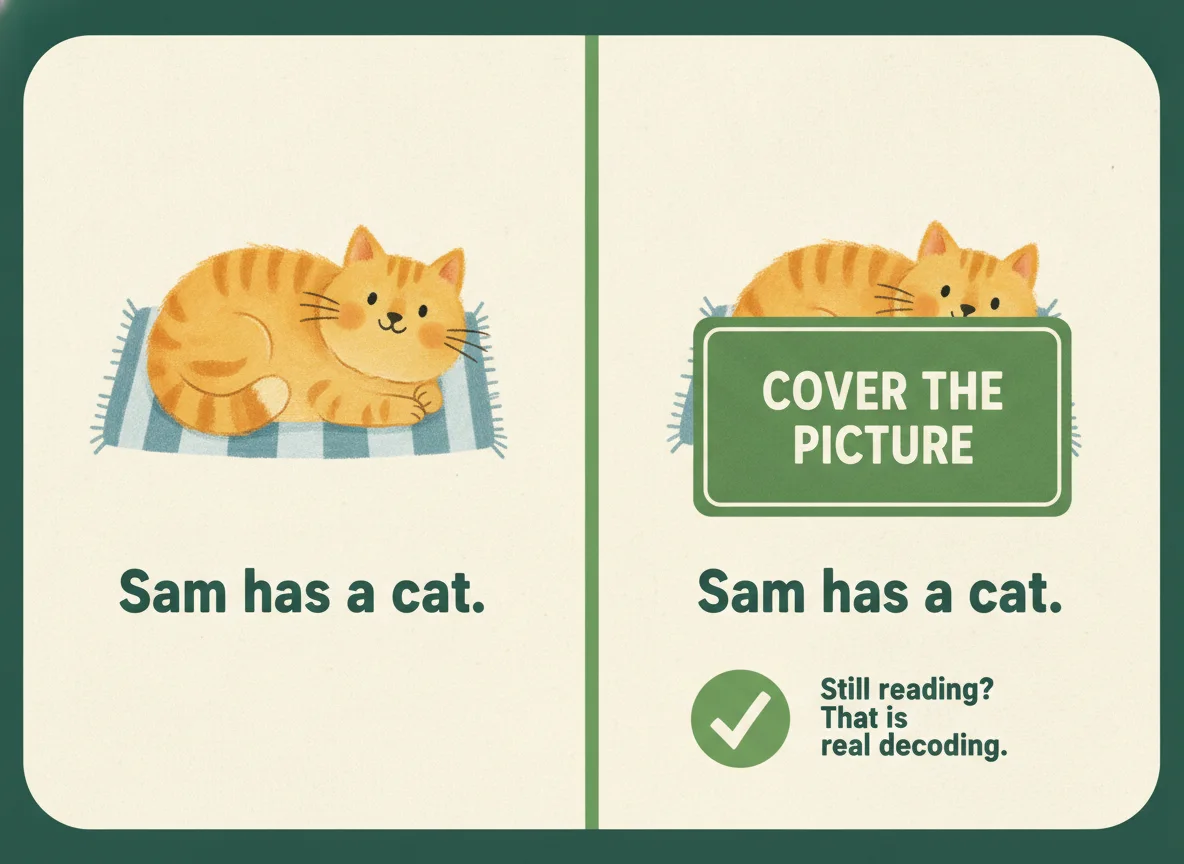
Decodable readers and leveled readers can sit on the same shelf and look similar, with a cover, a few lines per page and a picture. The difference is in how the words were chosen. Decodable readers choose words by the phonics a child has been taught. Leveled readers choose words to fit a difficulty scale. That one difference changes what each book is good for.
The short answer
| Decodable readers | Leveled readers | |
|---|---|---|
| Organized by | The letter-sound patterns taught, in a set order | A difficulty rating (letters, numbers or bands) |
| Word choice | Words the child can sound out from taught patterns, plus a few pre-taught tricky words | Often repeated phrases, high-frequency words and words suggested by the picture |
| What the child is meant to do | Read the letters and blend the sounds | Use a mix of clues: pictures, repeated patterns and letters |
| Main job | Practice phonics in real sentences | Build book handling, fluency and comprehension |
| Risk | Texts can feel stilted if poorly written | A child can get through a book by guessing |
| Best for | Beginning readers learning to decode | Read-alouds, shared reading and confident readers |
How decodable readers work
A decodable series starts with a handful of sounds and adds a few at a time. Each book only uses what has been taught. If a child has learned a, i, m, s, t, p, n, a page might read Sam sat. Pip sat. Every word is something the child can sound out. A few tricky words are taught by heart first, so they never appear unannounced.
The strength of this approach is reliability: sounding out works on every word, so the child learns that it works.
How leveled readers work
Leveled readers were built to sort books by difficulty so a teacher or parent can pick a book that is neither too easy nor too hard. The scale usually weighs a mix of things: how long the sentences are, how often words repeat, how much the pictures support the text and how familiar the topic is.
Many leveled books use a repeating pattern ("I see a dog. I see a cat. I see a bird."). That helps a child feel successful early on. It also means that a child can read the book by remembering the pattern and glancing at the picture without really looking at the letters.
The question to ask about any book
Instead of asking whether a book is "decodable" or "leveled", ask: can my child read every word in this book by looking at the letters?
- If yes, the book works as decoding practice.
- If no, the child will need to guess, or you will need to supply the words. That is fine for a shared read, but it does not build the decoding habit.
Are Bob Books decodable?
This is a common question, and the answer depends on the stage and the child. Many early sets are written with a controlled set of sounds, so they work as decodable text for the child who has been taught those sounds. The check is the same as for any book: does every word fit what your child has learned? Run the check on the first few pages before you buy a whole series.
What to say on the page makes the difference
The text is only half of it. How an adult responds when a child gets stuck matters as much as which book is used.
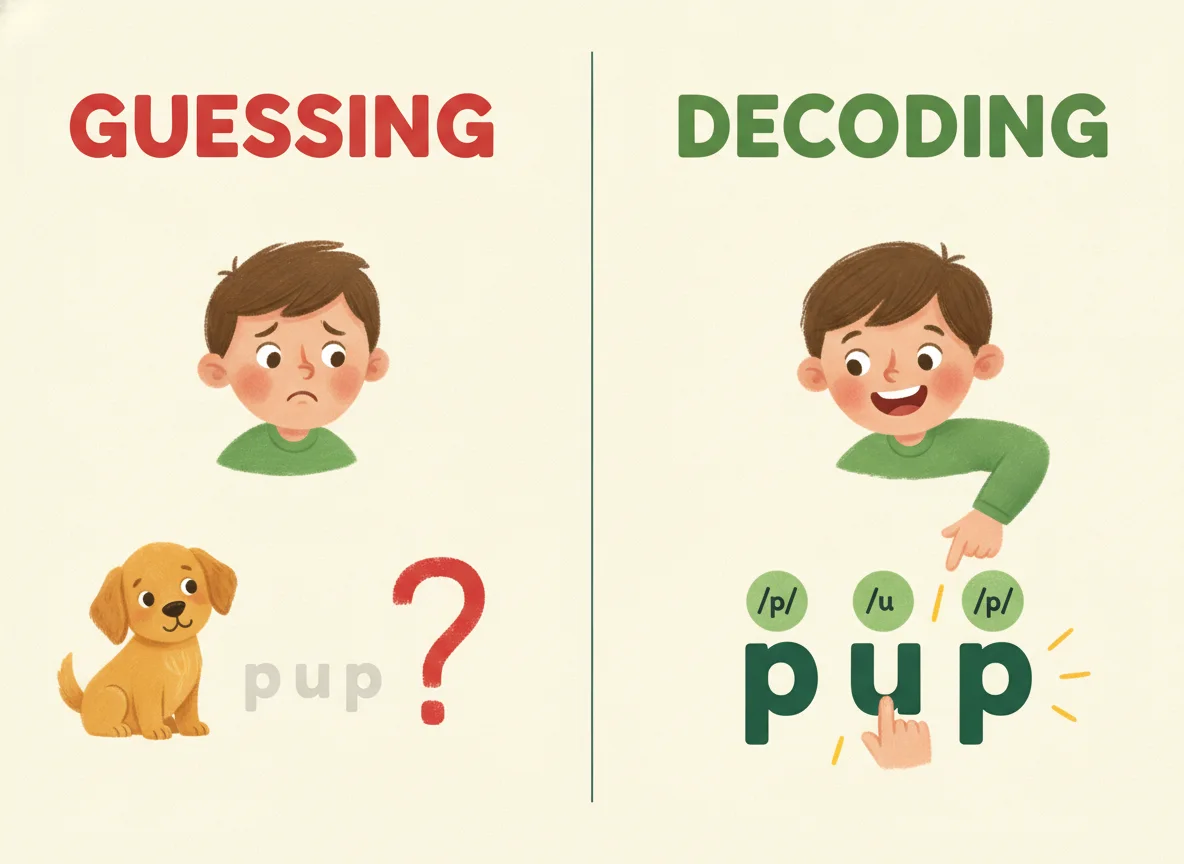
With a decodable book, the response is always the same: send the child back to the letters.
| When your child... | Say |
|---|---|
| Guesses from the picture | "Cover the picture. What do the letters say?" |
| Says the wrong sound | "Close! Let's check that sound. Look at this letter." |
| Stops at a word | "Tap each sound. Then slide it together." |
| Skips a word | "Let's go back and look at that word again." |
| Is stuck on a tricky word | "This is a heart word. I'll tell you. Now you say it." |
These prompts are taken from the Parent Guide in The Decodable Readers Library, where they appear alongside an example conversation. The same prompts do not work well with a leveled book, because that book may genuinely need the picture.
When to use each
| Situation | Better fit |
|---|---|
| A child is learning letter sounds and blending | Decodable |
| A child sounds out simple words but guesses on longer ones | Decodable at the right stage |
| Reading together for enjoyment | Leveled or picture books |
| Building vocabulary and talking about stories | Either, with an adult supporting |
| Practicing fluency by rereading | Decodable stories, read two or three times |
Most families use both: decodable books for the child to read alone with support, and any book at all for reading aloud.
What a decodable series looks like in practice
The Decodable Readers Library has 9 stages with 12 stories each, so 108 stories. Stage 1 begins with short a and short i and a few consonants. Later stages add the rest of the short vowels, digraphs, blends, silent e, vowel teams, r-controlled vowels and word endings. A script checks every story against the sounds taught up to that stage.
Each story arrives as a four-page packet: a warm-up page, the story itself on pages two and three, and an activity page with questions, a word hunt and a sentence to write. The 3-Minute Placement Test finds the stage where a child should start, which helps with the common problem of a series that starts too easy or too hard.
To go deeper, read what decodable books are and the honest pros and cons of decodable texts. For the stage-by-stage tour, see decodable readers: the 9 stages, and for the difference between a story and a fluency passage, decodable passages vs. stories.