I Before E Except After C: When the Rhyme Fails
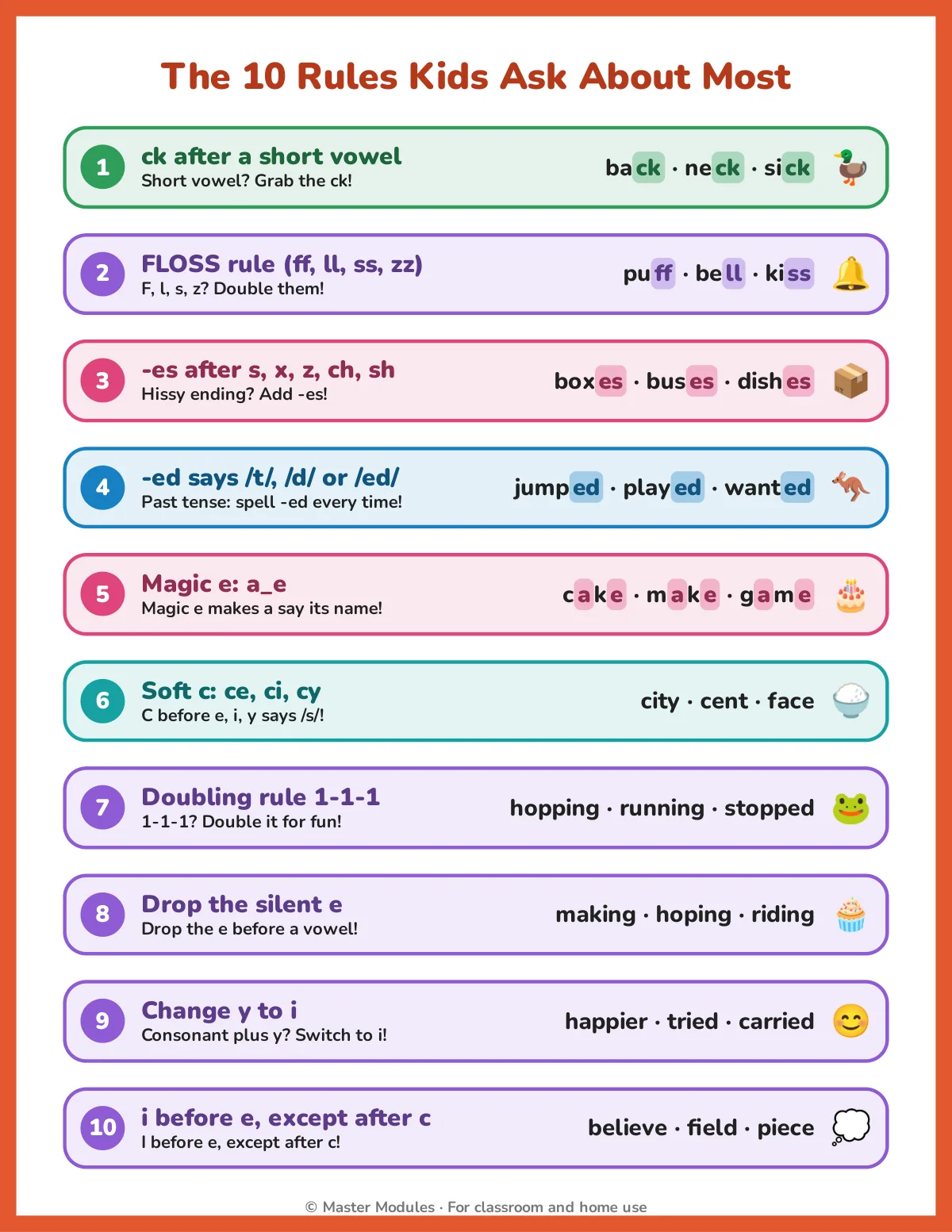
"I before e, except after c" is a good rule for one job: spelling the long e sound (/ē/). It says to write ie in words like believe, field, piece and chief, and ei right after the letter c, as in receive, ceiling and deceive. The rhyme fails when the sound is not /ē/. Words with /ā/ use ei or eigh (eight, weigh, vein), and a short list of words break the pattern for no reason you can teach. This guide lays out where the rhyme works, where it fails, and a better version to give to children.
The rhyme and its full version
The short version many people remember:
I before e, except after c.
The longer version covers a second case:
I before e, except after c, or when sounding like a, as in neighbor and weigh.
Neither version is complete, but the long one is closer to the truth. It is useful to treat the rhyme as a sound-based rule, not a letter-based one. The sound is what decides.
When the rhyme works
Listen for /ē/ (the sound of the letter e) in the middle of the word.
| Spelling | Sound | Examples |
|---|---|---|
| ie | /ē/ | believe, field, piece, chief, thief, niece, shield, yield |
| ei after c | /ē/ | receive, ceiling, deceive, receipt, conceive, perceive |
In each of the ie words, there is no c just before the pair. In each of the ei words, there is a c, and the sound is /ē/.
When the sound is /ā/: ei and eigh
The second half of the rhyme handles words where ei or eigh says /ā/, the letter name of a:
- eight, weigh, sleigh, neigh, neighbor, weight, freight
- veil, vein, reign, beige
These are mostly words where the usual "i first" order would not make sense. A child who hears /ā/ should think of ei or eigh before trying ie. It helps to teach this as its own small group, since the pattern is regular. (A vowel team poster for ei and eigh makes a good wall reference.)
The letters ie are not always /ē/
The ie spelling has its own sounds, which has nothing to do with the c part of the rhyme:
- ie at the end of a short word says /ī/: pie, tie, lie, die.
- ie in the middle often says /ē/: field, chief, piece.
- ie as short e: friend. A real oddball, and a very common word.
Teach friend as its own rule breaker. Children can learn it with "a friend to the end".
The real exceptions
Here is where honesty matters. Some words break the rule, and the rhyme cannot explain them:
- seize, weird, either, neither, leisure, protein, caffeine, height. These use ei where the rhyme predicts ie, or have a different sound.
- science, society, ancient, species, efficient. These have ie right after c, so they break "except after c". The c sounds like /s/ or /sh/, and in several of them the i and e are not a single vowel team.
None of this is a reason to throw out the rhyme. It is a reason to teach it with a clear scope and a short exception list.
A better version to teach
If you want one version that is true more often than the classic one, try this:
- If the sound is /ē/: use ie (believe, field), except right after c, where you use ei (receive, ceiling).
- If the sound is /ā/: use ei or eigh (vein, eight, weigh).
- Learn the rule breakers as a short list: seize, weird, either, neither, friend, height, science.
This is longer than the rhyme but it matches the way English works. Children and adults can use it as a checklist.
How to practice it
Sort by sound. Give kids twelve words on cards. They sort into three piles: ie says /ē/, ei after c says /ē/, ei/eigh says /ā/. Add a fourth pile for rule breakers.
Spot the c. Show a word, cover everything except the letter before the pair, and ask: is it a c? That is the whole trigger for the "ei" spelling.
Dictation. Dictate believe, ceiling, eight, receive, field, neighbor, weird. Ask kids to say which rule they used before they write.
Proofread. Hide mistakes such as beleive, recieve and wierd inside a short paragraph. Misspelling believe and receive with the pair reversed is one of the most common spelling errors, and it is a good one for older students to practice catching.
What this shows about spelling rules in general
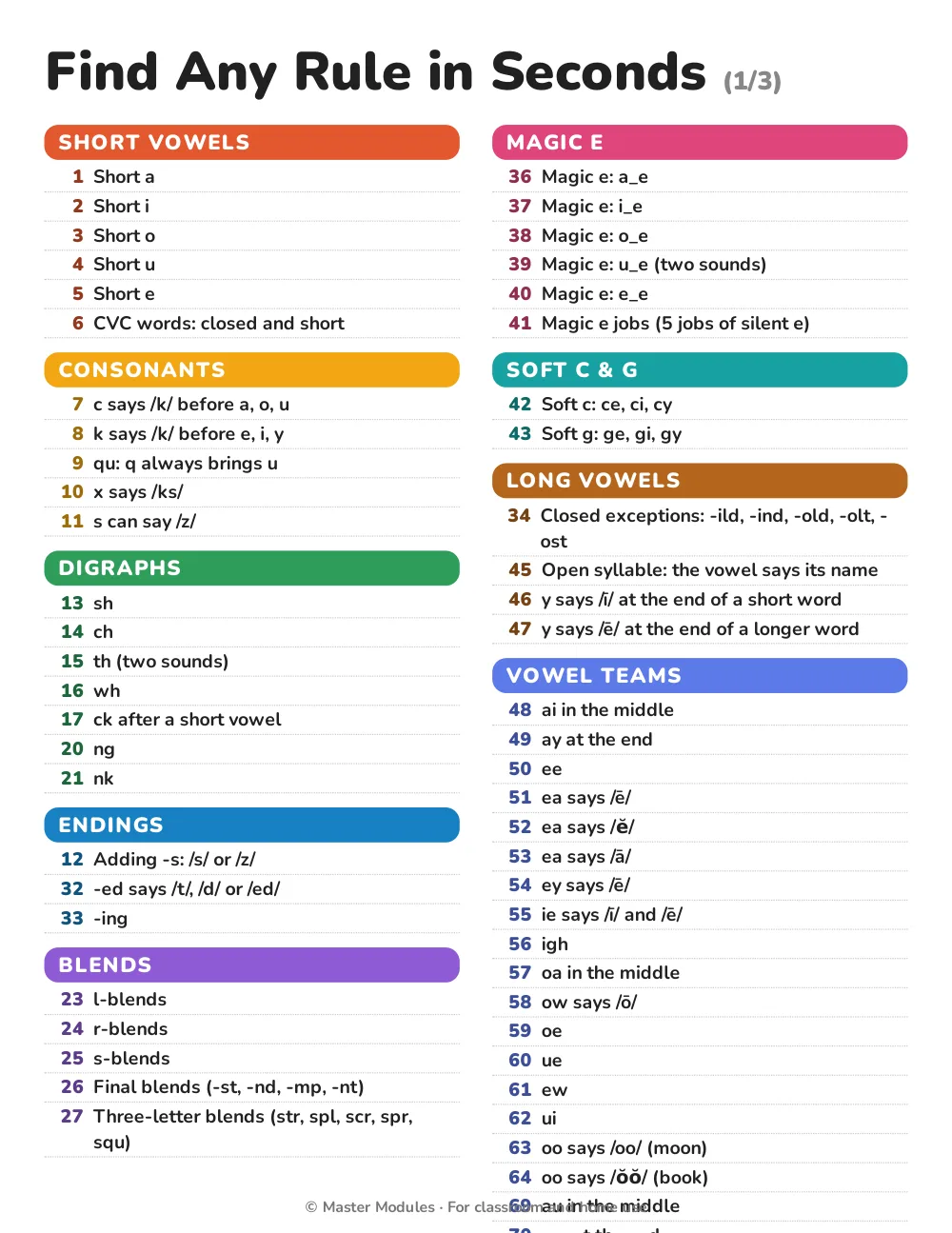
"I before e" is a useful case study in how English rules work. A short memory rhyme gets passed down because it is easy to say, even though it covers only a part of the pattern. Children benefit from rules that explain why, with the scope clearly marked. The sound /ē/ and the letter c are the two clues that carry most of the load here. For the larger system of spelling patterns, see the list of spelling rules in a teachable order, and for the other vowel pairs that make a long sound, see the vowel teams guide.
A poster for this rule
Phonics & Spelling Rules Posters has a poster for "i before e, except after c" with six example words, a contrast and a list of the real exceptions. It also has separate posters for ie saying /ī/ and /ē/, and for ei and eigh saying /ā/. They sit in the same 130-poster set as the rest of the rules, in color and black & white, in full-page, half-page and mini sizes.